Balancing AI Automation with Human Creativity in Website Design and Promotional Strategy
What exactly does balancing automation and creativity actually mean?
Balancing AI automation and human creativity means using technology to speed up repetitive work without stripping away the originality, judgment, and empathy that make web design and digital marketing effective. The aim is not to replace people with machines. It is to create a workflow where automation improves efficiency, while people provide the insight, taste, and brand understanding that tools cannot replicate.

In practice, this balance shows up across the full content strategy lifecycle. AI can help organize data, identify patterns, and handle production tasks, while humans shape the message, refine the tone, and decide what will resonate with real people. That is especially important in business areas where trust signals matter, such as local service brands, professional firms, and community-centered organizations.
For example, a website might use AI to draft page outlines or suggest page structures, but a designer or marketer still needs to decide whether the result reflects the company’s brand voice, supports the user experience, and aligns with the business goals. Good balance also improves brand consistency, because automation works best when it follows human-defined standards instead of inventing them on the fly.
In other words, AI should support decision-making, not replace it. The strongest results come from combining automation with creativity, personalization, and human oversight. That is true whether https://fulton-ny-ip516.cloudhinter.com/posts/web-development-and-seo-optimization-solutions-for-hempstead-ny-businesses you are building a landing page, writing a blog post, or running a broader digital marketing campaign.
Where should AI handle the recurrent work?
AI is most effective when it takes over repetitive, time-consuming tasks that do not require much nuance. That is where workflow automation can reduce time and boost scalability without hurting quality. The key is to identify tasks that are rule-based, data-heavy, or low-risk for your brand.
An evident use case is content generation for first drafts, outlines, titles, meta descriptions, and FAQ suggestions. AI can produce a practical starting point, especially when paired with strong instructions and firm boundaries. It can also help with keyword research by grouping terms, surfacing related phrases, and identifying topic gaps faster than manual review alone.
This method is especially useful in SEO services, where teams often need to analyze large amounts of data. AI can support:
- technical reviews and issue grouping
- brief drafting
- topic clustering and semantic mapping
- competition analysis summaries
- simple reporting and trend detection
In a modern content workflow, AI can also help with scheduling, repurposing content, and organizing assets across campaigns. That kind of efficiency helps teams move faster while preserving time for strategy and review. For businesses with lean teams, this matters because it creates more room for high-value creative work.
The smartest use of automation is not “do everything with AI.” It is “let AI do the repeatable work so people can focus on higher-impact decisions.” That keeps production moving while protecting originality, audience relevance, and quality control.
Where exactly do human specialists add the greatest value?
Human experts add the highest value where context, taste, and judgment matter. This covers brand strategy, copywriting, user experience, and final decision-making. Even the best tools cannot fully understand what makes a business exist, local audience expectations, or how a brand should feel across channels.
Skilled ai experts understand this. They do not use AI as a shortcut around strategy; they use it as a multiplier. The human role is to set the message, determine positioning, and ensure the output matches the organizational objectives. In copywriting, for example, AI can suggest alternatives, but humans are better at crafting stories, nuance, persuasion, and emotional impact.
Human expertise is also essential for interpreting audience intent. A page may rank for a phrase, but if the messaging does not match what the visitor is actually looking for, performance will suffer. That is why a thoughtful team always checks whether the content supports the right search intent and whether it feels trustworthy to the target audience.
For web and marketing teams, human strengths show up in areas like:
- defining the overall content strategy
- preserving a distinct brand voice
- shaping a better user experience
- weighing tradeoffs based on business priorities
- checking tone, clarity, and compliance
AI can accelerate work, but humans still create the emotional and strategic layer that makes a brand memorable. That is what turns output into meaningful communication.
How can AI support better web design without rendering it generic?
AI can strengthen web design when it is used to refine structure, usability, and testing rather than to create cookie-cutter layouts. The risk is easy to see: if every design decision comes from a template, the final product can seem generic. To avoid that, use AI as a helper for layout optimization, not as the sole designer.
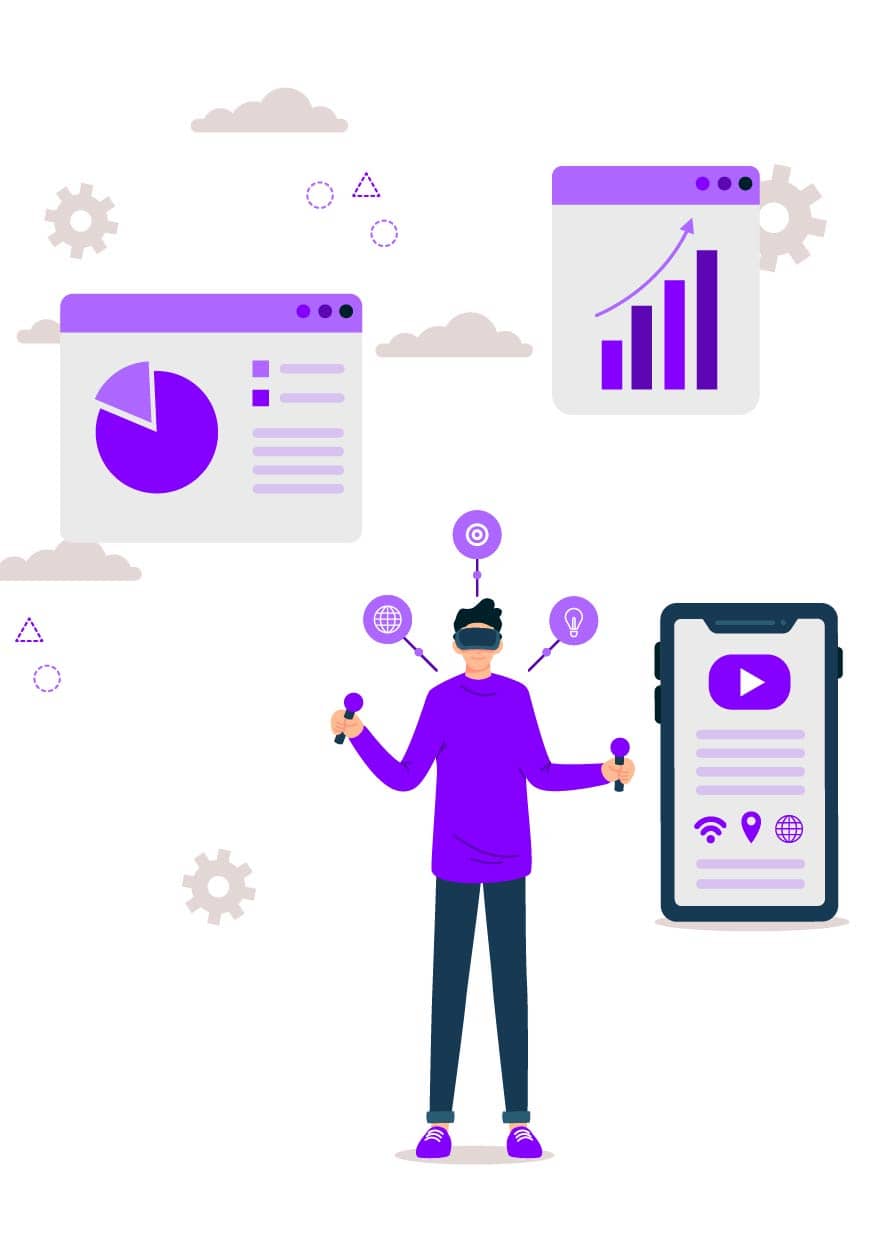
For example, AI can analyze engagement patterns and suggest better placement for calls to action, content blocks, or navigation elements. It can help identify friction points in the user experience and suggest changes that improve conversion rate optimization. That kind of insight is useful because it is data-driven and practical.
Still, the visual direction should come from human judgment. A brand’s visual identity needs to match its audience, industry, and local market. A polished design for a law office in Hempstead, NY will look different from a playful storefront site or a nonprofit campaign page. Human designers know how to turn business goals into a visual system that feels authentic.
AI can also help with responsive design by testing how layouts adapt across screen sizes and by flagging usability issues for mobile-first users. That matters in Hempstead, NY and across Long Island, where many visitors are searching nearby on phones while on the move. If the site is hard to use on mobile, engagement falls rapidly.
The best approach is to let AI speed up the technical and analytical side of design while humans shape the creative direction. That keeps the site effective, practical, and distinctive at the same time.
How can SEO services use AI while preserving content original?
SEO services gain from AI when the technology helps teams better understand search intent, strengthen content optimization, and coordinate large-scale work. But originality still matters. Search engines and users both reward content that demonstrates expertise, usefulness, and a real point of view.
AI can support on-page SEO by helping with title tag ideas, heading suggestions, internal content structure, and readability improvements. It can also surface semantic keywords that add to topical depth. For example, if a page targets “web design,” AI might suggest related terms tied to responsiveness, UX, conversion, and page speed. That helps build relevance without stuffing keywords.
Good SEO work is not just about inserting terms. It is about aligning the page with audience intent, making the message clear, and presenting useful information in a way that supports search visibility. Humans need to verify that the content is accurate, differentiated, and aligned with the brand’s tone.
To keep content original, SEO teams should:
- use AI for research and drafting, not final approval
- bring in firsthand insights, examples, and expertise
- edit for tone, clarity, and brand voice
- avoid repetitive phrasing across pages
- review for duplication before publishing
This is where content optimization becomes a human-and-AI partnership. AI can speed up the process, but human editors ensure the content feels credible, helpful, and unique.
What should digital marketing teams in Hempstead, NY prioritize?
For digital marketing teams in Hempstead, NY, the top priority is local relevance. Hempstead is a commercial center on Long Island with a mix of local shops, professional services, and community-driven organizations. That means the most effective campaigns appeal to nearby residents, local decision-makers, and people searching for solutions on mobile devices in real time.
Local SEO should be a central priority for any business that wants visibility in Hempstead, NY, Nassau County, and surrounding Long Island towns. People often search for services close to home, and they expect businesses to show up with clear location signals, useful information, and a trustworthy online presence. This matters most in a crowded Long Island market where local competition is strong.
Community-centered marketing matters too. In a place like Hempstead, familiarity and trust are key factors in conversion. People want to know a business understands the neighborhood, serves the local area, and shows up consistently. That is why community marketing performs so well when paired with content that reflects the culture, concerns, and priorities of the area.
Teams should also consider how to serve Long Island audiences more broadly. A message that works in Hempstead may also need to resonate in nearby towns, so campaigns should combine hyperlocal detail with broader regional relevance. That can support small business growth by widening reach without losing the local touch.
Practical priorities for Hempstead and surrounding areas include:
- local service pages with clear location signals
- mobile-optimized site experiences
- reviews and credibility-building content
- ongoing Google Business Profile updates
- campaigns that match local audience behavior
How can you create a practical human-in-the-loop system?
A solid human-in-the-loop process makes AI useful without letting it operate unchecked. The idea is simple: AI generates drafts, suggestions, or analysis; humans evaluate, improve, and approve. That process should include editorial review, quality assurance, and results analysis after publication.
Start by defining clear roles. AI can assist with research, drafts, and workflow support, while team members handle strategic decisions and final edits. This helps protect brand voice and ensures the work stays aligned with the company’s messaging. It also improves consistency across campaigns, which is essential for long-term trust.
Then create checkpoints. A practical workflow may include:
- AI-assisted outline or brief creation
- manual review of strategy and audience fit
- content creation with brand-specific inputs
- content review for tone and accuracy
- final QA for links, formatting, and consistency
- performance tracking after launch
That final step matters because balance is not just about output quality; it is about results. Teams should watch how content performs and use that feedback to adjust the process over time. When the system is built well, it supports both creativity and efficiency without sacrificing originality.
What resources and safeguards support teams stay creative and efficient?
The proper AI tools can make teams quicker, but guardrails are what keep the work effective. With no rules, automation can drift into repetitive or off-brand output. With the proper structure, AI becomes a reliable part of the creative process instead of a risk.
A practical setup starts with a content calendar. A content calendar gives the team insight into deadlines, themes, campaign priorities, and seasonal opportunities. That supports planning and helps AI-generated drafts stay consistent with real business goals. It also avoids random content production that does not connect to larger strategy.
A comprehensive style guide is equally important. It should define tone, preferred terminology, formatting rules, and examples of approved messaging. When AI is prompted with a strong style guide, the output is more likely to match brand consistency and cut editing time.
Teams should also commit to ethical AI practices. That means avoiding misleading claims, respecting privacy, checking factual accuracy, and not publishing content that feels mass-produced or deceptive. Ethical use strengthens trust signals, which is especially important for businesses that rely on long-term relationships and community reputation.
Practical guardrails include:
- authorized prompt templates
- manual review before publishing
- source verification for claims
- content duplication checks
- defined usage rules for AI-assisted assets
These systems help teams maintain creativity while still benefiting from automation and efficiency.
How do you measure whether the balance is working?
You measure the balance by looking at both process and performance. On the process side, ask whether AI is saving time without reducing quality control. On the performance side, track whether content and design are improving visibility, engagement, and conversion.
Helpful data comes from analytics, which can show how users interact with pages, where they drop off, and what content drives results. If the website is getting more organic traffic and visitors are spending more time interacting with the content, the balance may be working. But traffic alone is not enough. You also need to look at whether visitors are taking important actions.
That is where engagement and conversion tracking come in. Are people clicking through to services pages? Are they filling out forms? Are they calling, booking, or requesting quotes? Those actions show whether the content is performing well.
It is also important to watch quality metrics over time. If AI helps produce content faster but the material starts sounding flat, the team may be over-relying on automation. If traffic rises but conversions stall, the message may not match audience intent. Good analysis should connect content workflow decisions to real business outcomes.
The most useful KPI set usually includes:
- growth in organic traffic
- time on page and scroll depth
- click-through rates
- form submissions or calls
- conversion optimization gains
Which mistakes should businesses avoid when using AI?
The biggest mistake is over-automation. If too much of the process is handed to AI, the result can feel robotic, repetitive, and disconnected from the audience. Automation should increase efficiency, not erase judgment.
Another common issue is generic content. AI tools often produce standard generic language unless they are guided by strong inputs and edited by humans. When that happens, the content may technically be usable but still fail to stand out. Generic content also weakens trust signals because it does not sound like it comes from a real business with real experience.
Duplicate content is another risk, especially when teams use similar prompts across multiple pages or campaigns. Search engines and users both respond better to fresh, differentiated material. Businesses should check for duplication and ensure each page has a distinct purpose.
The last big pitfall is a loss of brand voice. If every draft sounds machine-generated, the brand can lose identity and trustworthiness. This is a significant problem for companies that rely on client relationships, referrals, and local recognition. In Hempstead, NY and throughout Long Island, people value recognition and authenticity. A business that sounds generic may find it hard to connect.
To sidestep these problems, companies should preserve human oversight in place, establish clear standards, and use AI as a helper rather than a replacement for strategic thinking. That is the safest path to effective, long-term results.
FAQ

How do I know which marketing tasks to automate with AI?
Automate tasks that are routine, rule-based, or data-heavy, such as keyword analysis, outline drafting, performance reporting, scheduling, and initial content drafting. Reserve key decisions, brand messaging, and final editing in human hands. If a task affects brand voice, user experience, or trust, it usually needs human oversight.
Can AI help with web design without making my site look generic?
Yes. AI can help with layout optimization, responsive design testing, and conversion rate optimization without running the entire design. To avoid a generic look, let humans shape the visual identity, tone, and structure. AI should support decisions, not replace the creative process.
How do SEO services use AI responsibly?
Responsible SEO services leverage AI for research, content optimization, semantic keyword discovery, and on-page SEO support, while humans review accuracy, originality, and search intent alignment. The best results come from combining automation with editorial review and quality control.
What role should humans play in digital marketing strategy?
Humans should lead brand strategy, copywriting, audience positioning, and final approval. AI can speed up the content workflow, but people are needed to protect brand voice, interpret analytics, and make judgment calls that reflect business goals and local relevance.
Sunstone Digital Tech34 Willis Ave, Mineola, NY 11501
(315) 758-3349
https://maps.app.goo.gl/raW1XN7K3jzLKAPz9
https://sunstonedigitaltech.com/hempstead-digital-marketing-agency
40.7400795, -73.6357138
How do Hempstead, NY businesses leverage AI while remaining local and authentic?
Hempstead, NY businesses should employ AI to improve efficiency, but maintain local SEO, community marketing, and human review at the center of the strategy. Since Hempstead is a business hub on Long Island with a mix of local shops, professional services, and community-driven organizations, authenticity matters. Businesses should speak to Nassau County and surrounding Long Island audiences in a way that feels comfortable, credible, and locally rooted.